Florence, Italy — Out of Time brings together the works of Claudia Mastrangelo, Giacomo Piussi, Marcela Gottardo, Marco Ulivieri, Serena Tani, and Tommaso Nelli — a collective exhibition of Florentine artists exploring transformation through space and time across painting, sculpture, ceramics, and installation.
United by a shared inquiry into the notion of time, each artist offers a distinct interpretation of how temporal experience manifests in the creative process and in the evolving life of the artwork itself. The exhibition unfolds as a meditation on impermanence and change, revealing how material, memory, and meaning transform under the influence of time — both physically and conceptually.
Special guest artist Delia Pérez-Salinas Tijerina (DiLos) presents Only Child, a cycle of eight video works titled Shadows Within Love and Love Within Shadows. Her practice unfolds as a form of lived allegory in which art, language, and identity merge into a single expressive gesture. Written in a highly symbolic register, her work evokes both tension and transcendence within the human experience — where love, shadow, survival, and joy are intertwined forces. Her contribution reveals an inner cosmology that moves between the personal and the universal, blurring the boundaries between performance, vision, and lived spirituality.
Through this exhibition, the artists invite the audience to reflect on their own relationship with temporality — how we perceive, measure, and endure its passage, and how every moment leaves a trace both visible and invisible.
Out of Time is a testament to Florence’s vibrant contemporary art scene, where tradition and experimentation coexist, and where artistic practice continues to evolve in dialogue with the shifting dimensions of time.
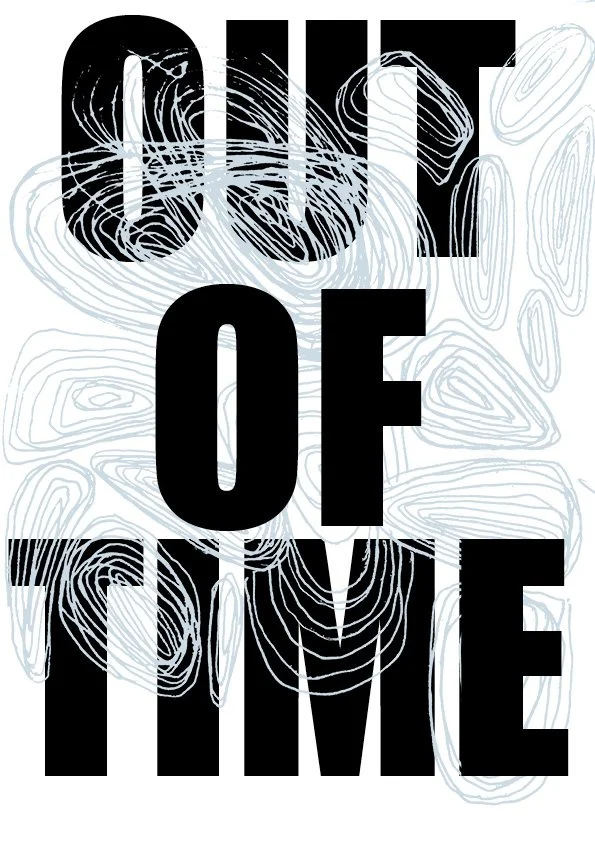
Out Of Time
November 15th until December 15th, 2025
Opening Reception 6:00 – 8:00 PM
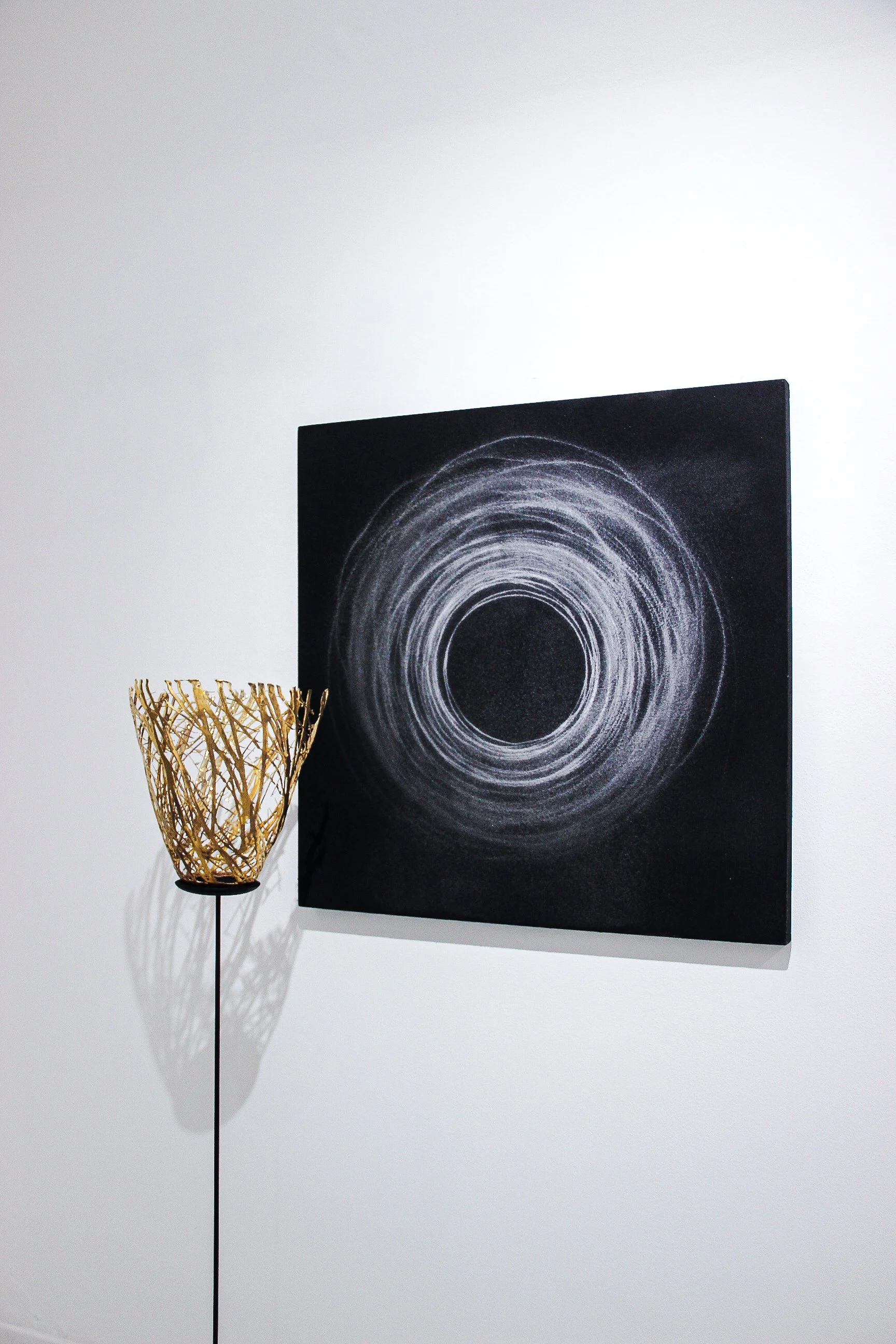
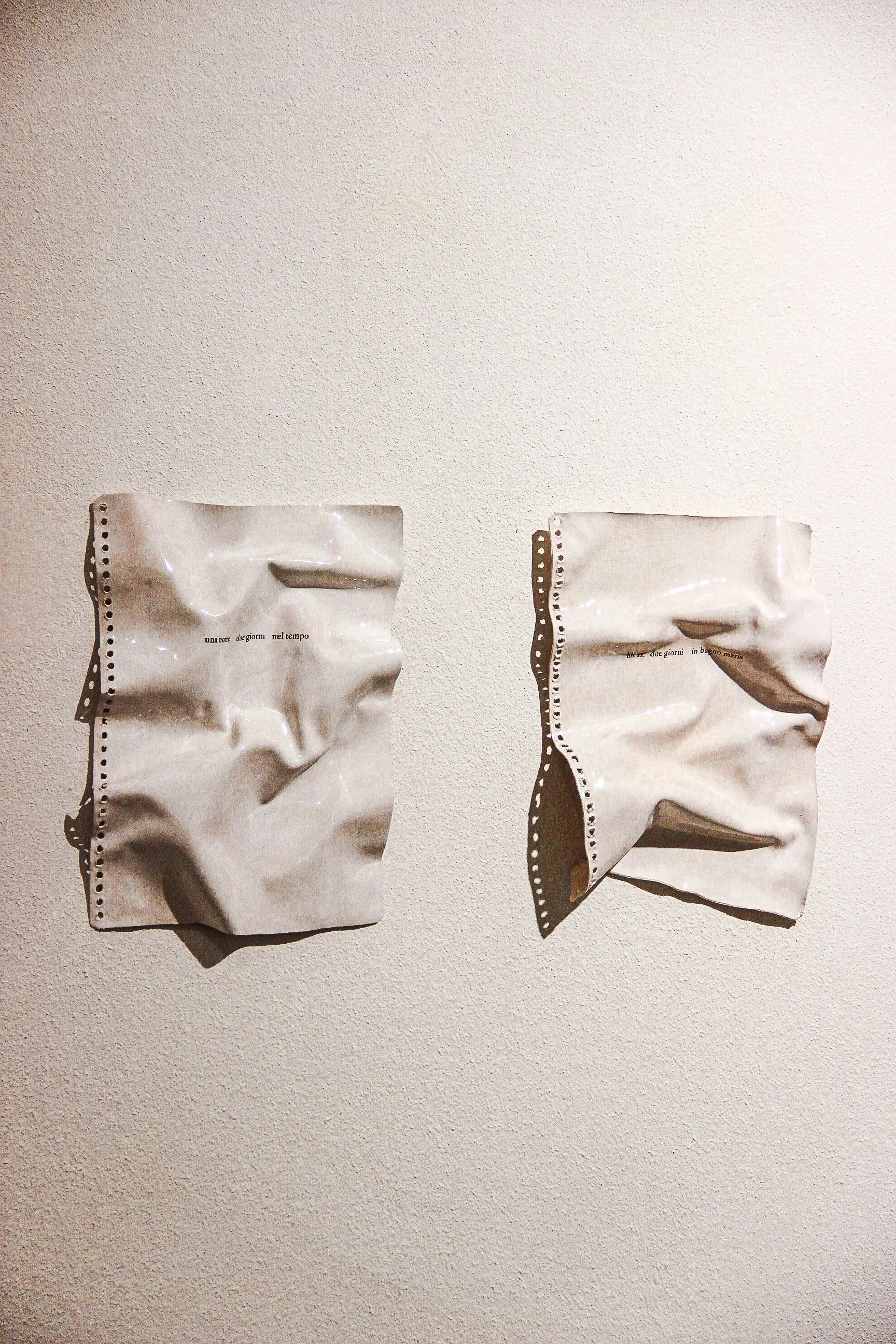
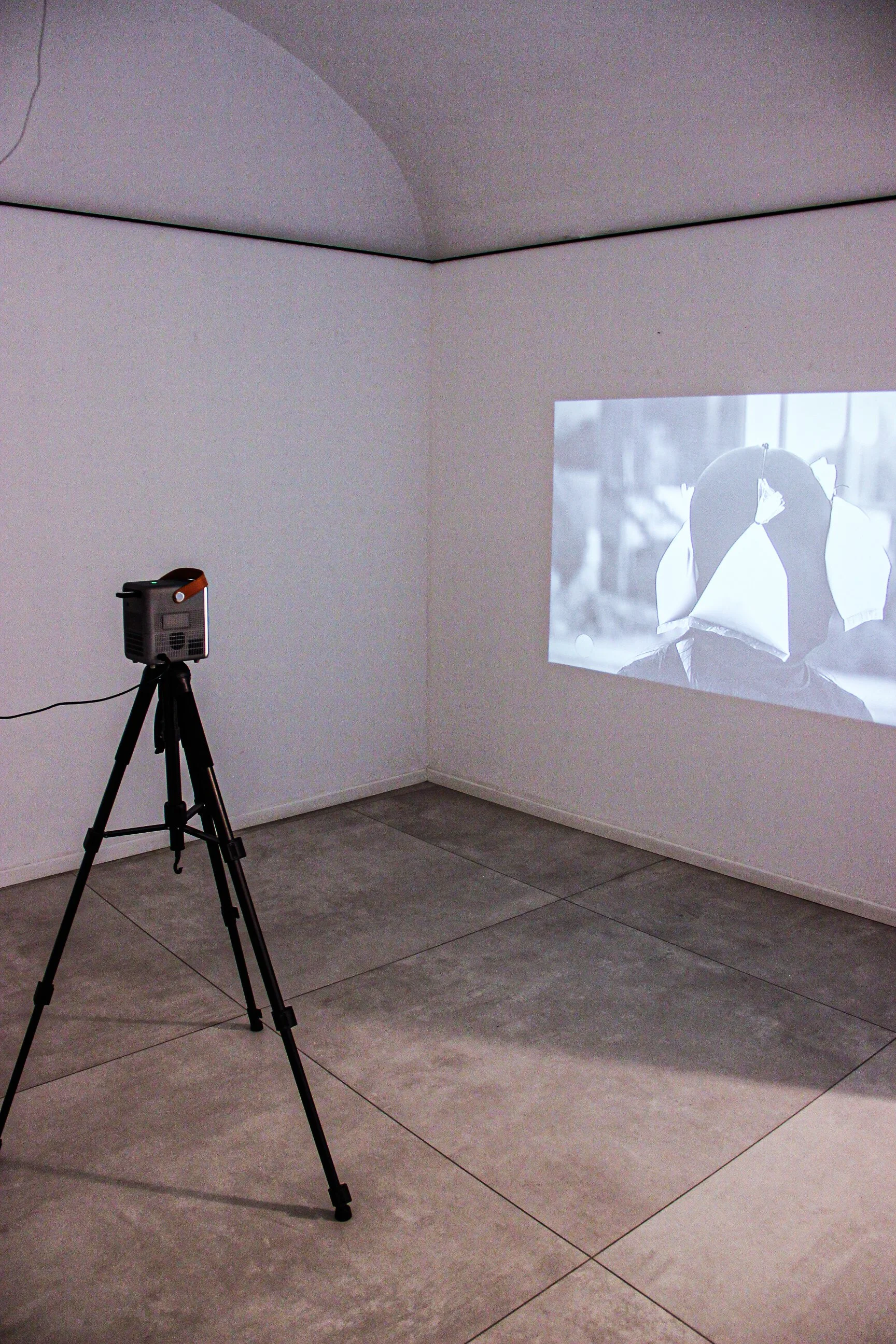
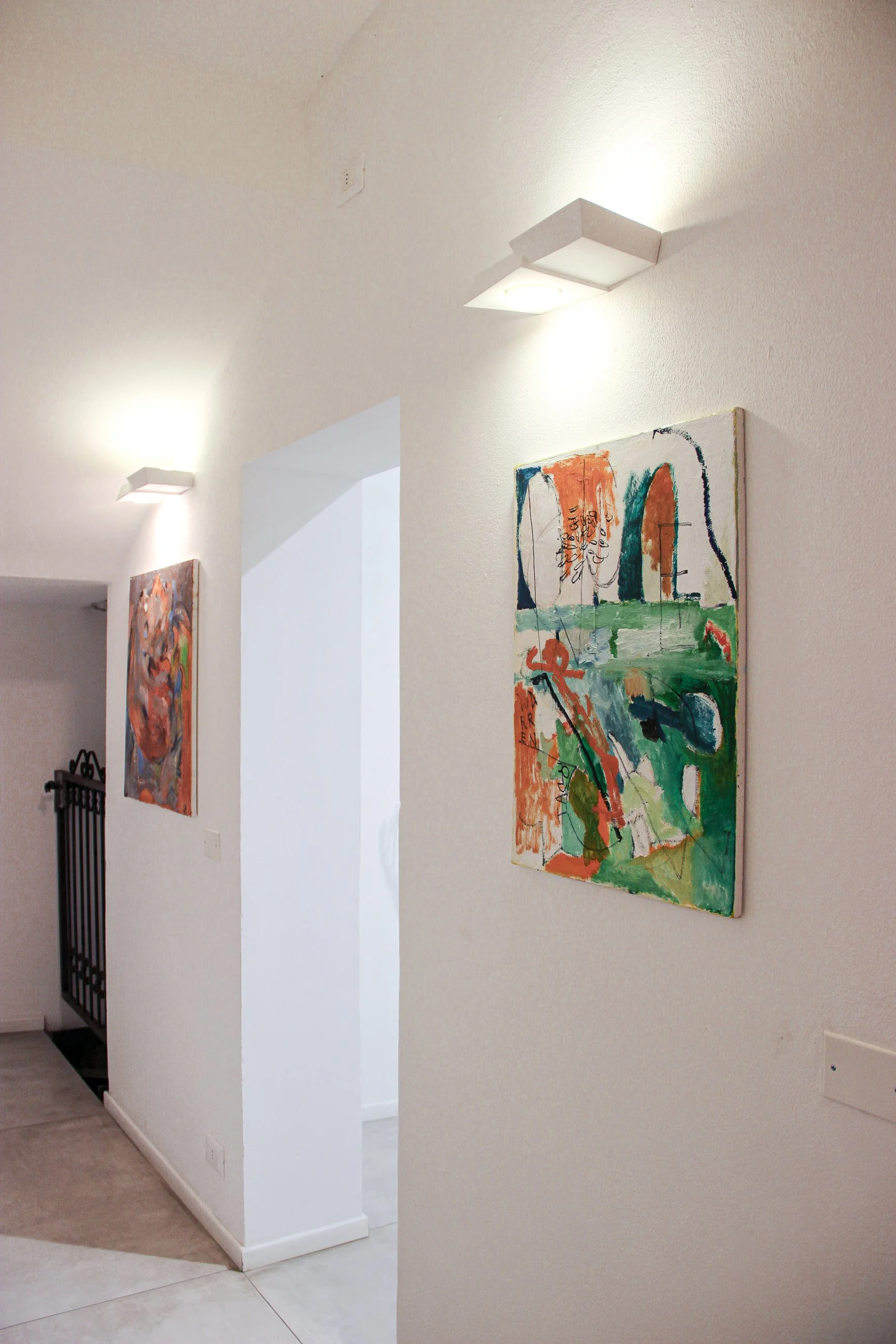
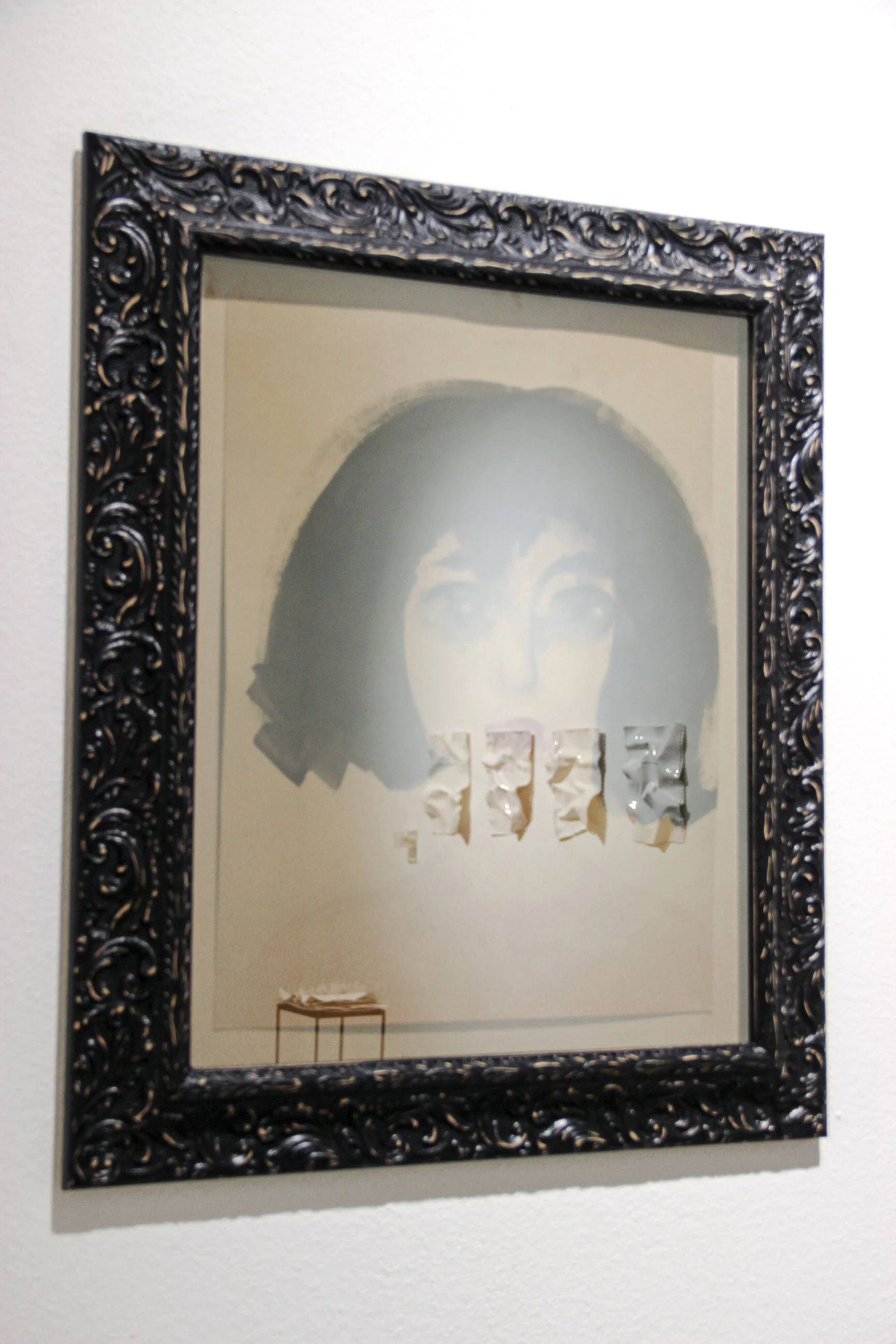
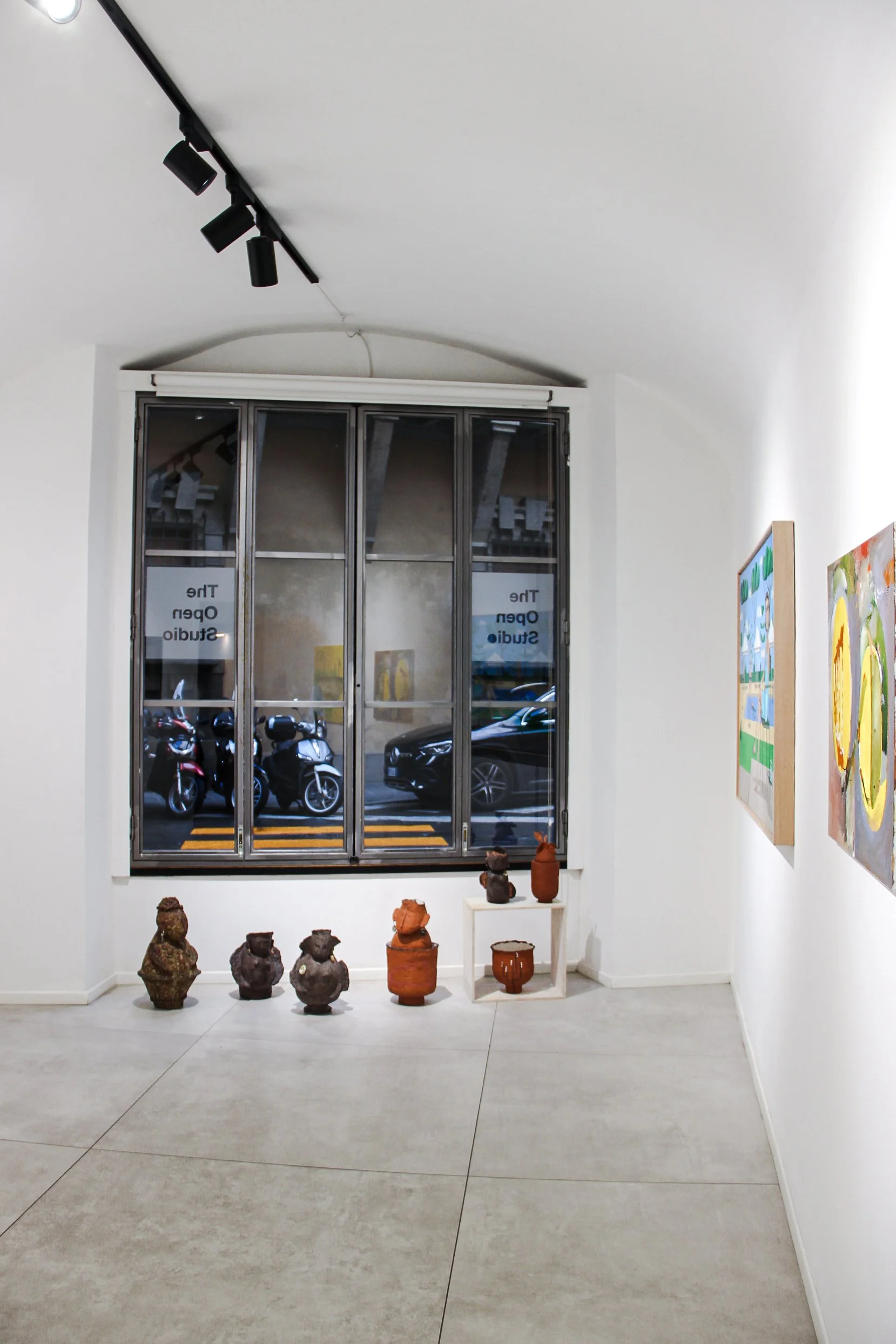
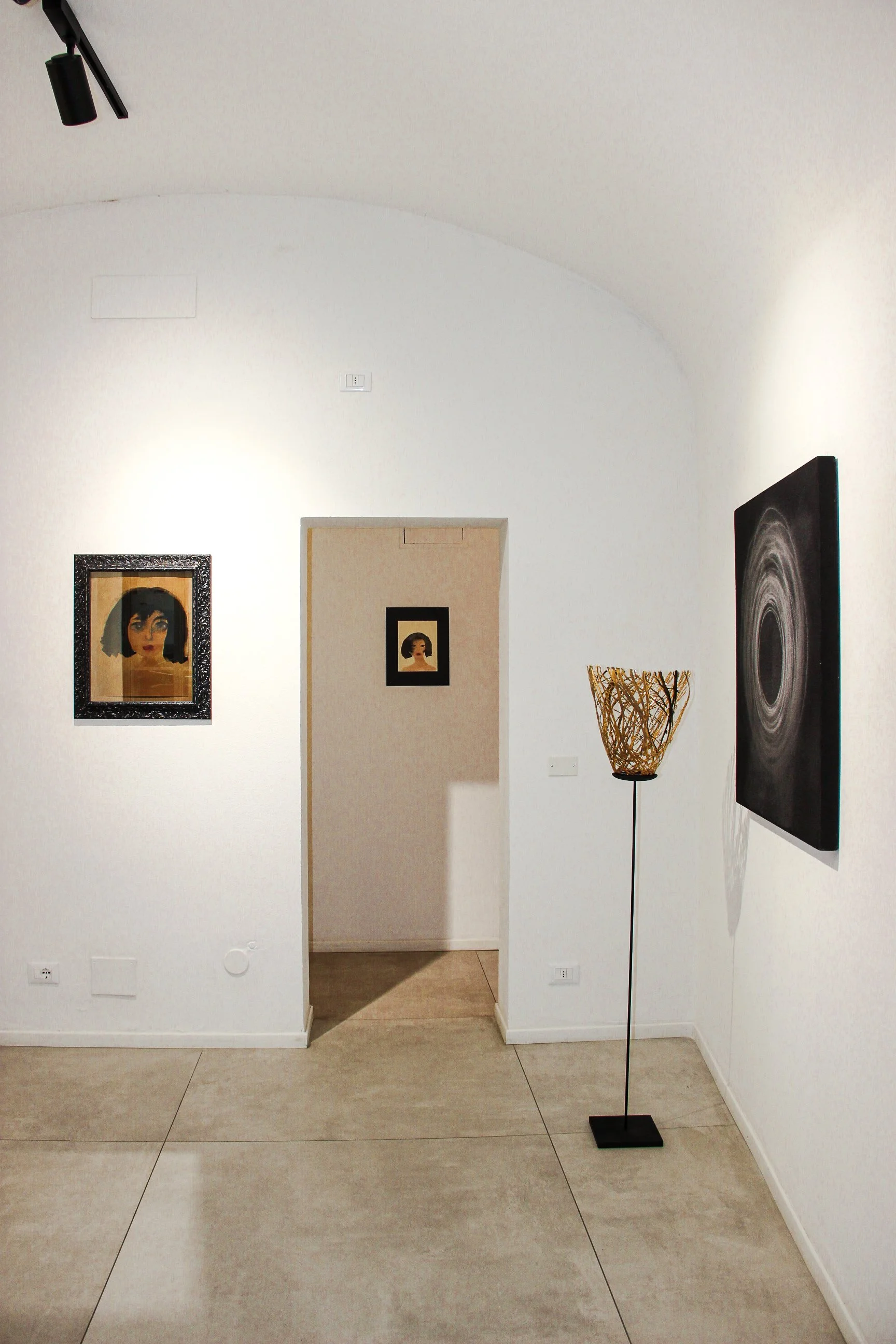
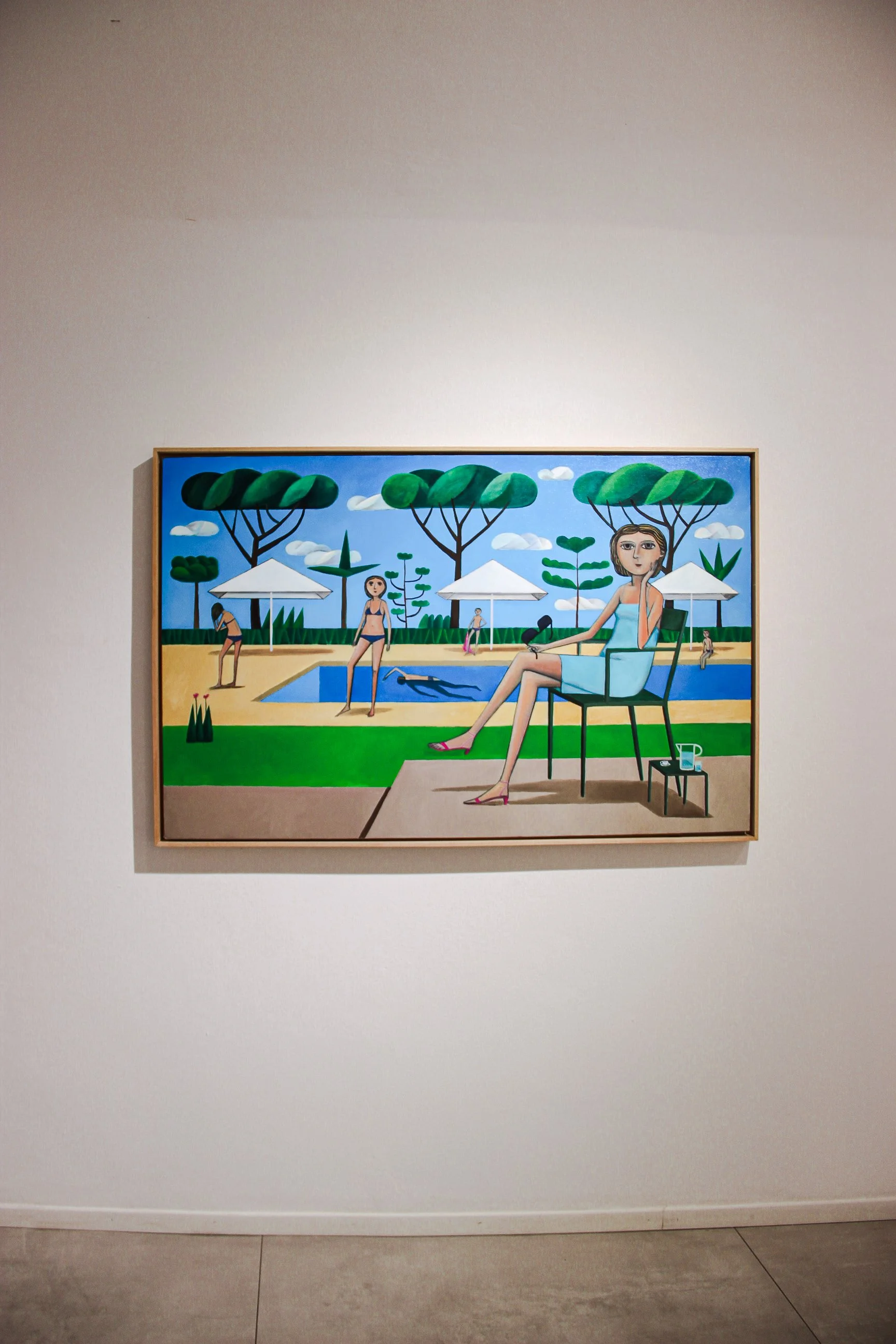
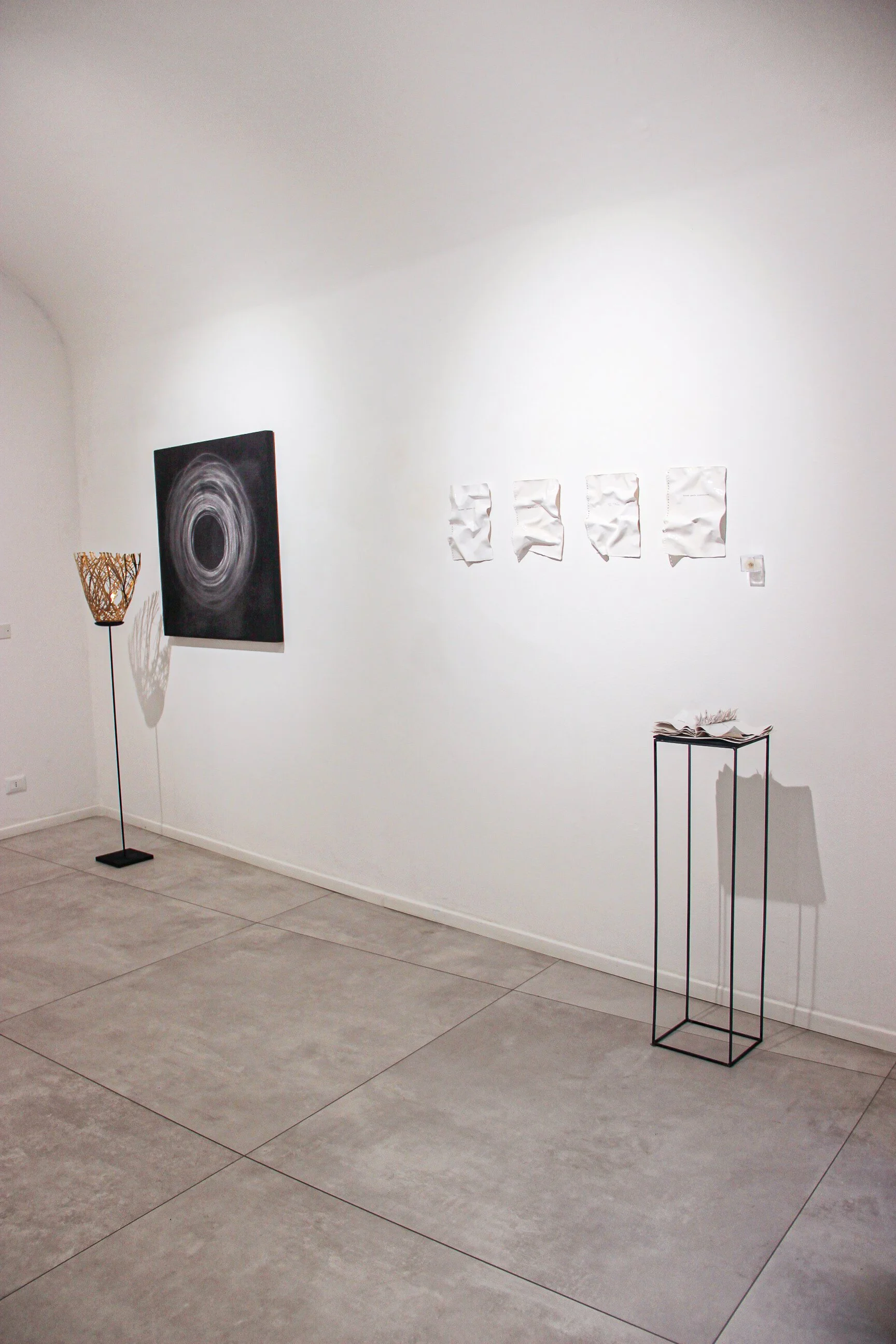
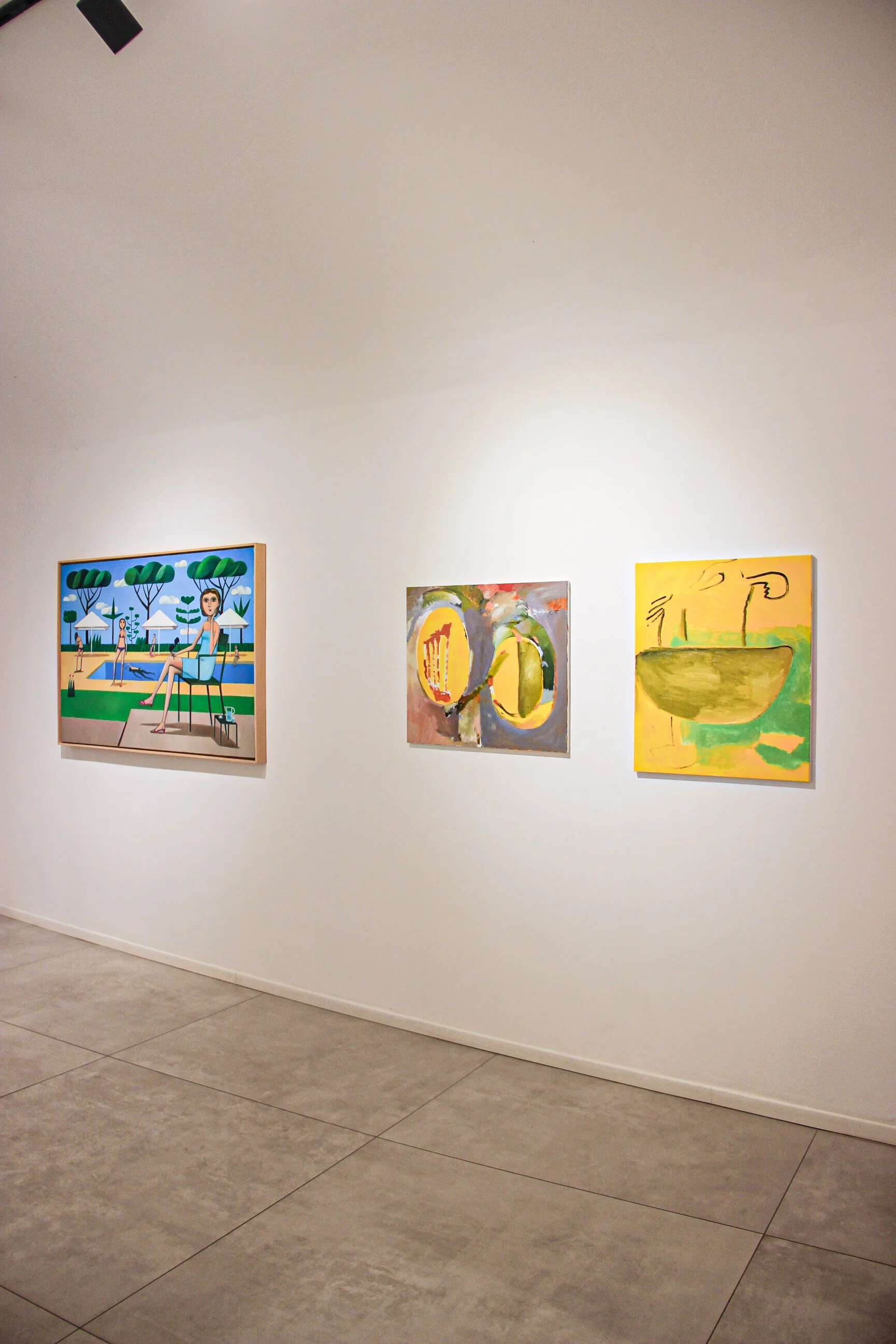
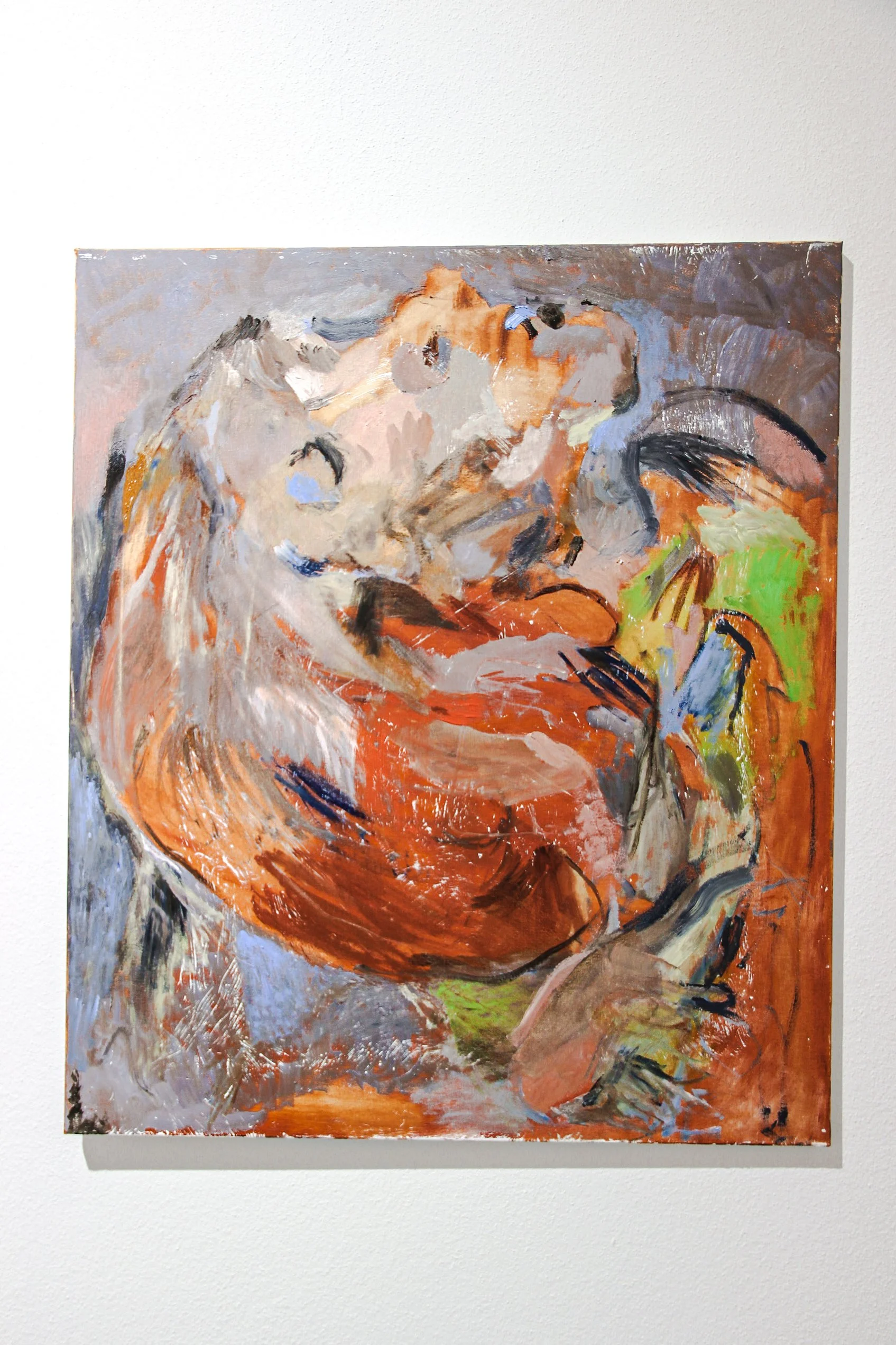
Artists At Display.
Claudia Mastrangelo
(France, Italy)
Lives and works between San Pancrazio, Tuscany, and Milan.
She uses stoneware to create her “Women” vase-sculptures in various sizes — women confronting their own destiny, objects anchored in a timeless archaism. She also works with porcelain to create cups and vases, both figurative and abstract.
Giacomo Piussi
Born in Udine, Italy, in 1967
Lives and works in Florence.
Graduated from Brera Academy in Milan; has shown in galleries in Italy, Belgium, Germany, and the USA
My work is simple: the subject matter is stripped to the basics, and what remains is an icon with an aura of philosophical suspension, and a window into the enigma of existence. The drawings on which the paintings are built are precise and have the same aim as those made by caveman, which was to give a shape to their desires, their dreams.
Italian art from the Middle Ages showed me how painting can communicate across barriers of low literacy, and it is with this concept in mind that I make art, delivering a message simple and unambiguous.
Tuscan early Renaissance painting, Giotto and Fra Beato Angelico in particular, had a great influence in my upbringing as an artist, specifically for the composition and narrative technique. I aim to I create a neutral atmosphere, away from any engagement. The purpose of doing so is to elevate the fictional characters I paint into a place outside of the real world: it’s a redacted version of reality where the weight of existence is edited out.
The characters I paint come in the form of essential shapes that relate to the geometric spaces created in the canvas more than to any pretense of realism or anatomical accuracy. The painting scene is organized in a “matter of fact” fashion, self-sufficient and self-explanatory, similar to an advertisement.
The subjects are inspired by real life in a very loose way; some are from my life experience, some are made up or inspired by things I read or movies, or art I see. I am open to all kinds of visual influence.
What inspires me are people, their aura, how they inhabit the space around them, and how they relate to one another visually. Art of the past also inspires me: there’s always much to explore in a painted figure, it tells us a lot about ourselves and the time we live in, it’s the mirrored image of one’s.a
My work routine consists of drawing a lot. I don’t draw from live subjects but from memory; this way, I highlight something peculiar about the subject or the situation, after which I rearrange the composition on canvas. My paintings are in the middle ground between calculated and instinctive, and it’s the workflow that makes every choice spontaneous.
I paint with oil colors on linen canvas.
Marcela Gottardo
Marcela Gottardo (b. 1982, Brazil) is a Brazilian-Italian artist whose practice explores philosophical questions surrounding time, being, duality, wholeness, and fragmentation. Her multidisciplinary work spans sculpture, ceramics, painting, and installation, often engaging organic forms and elemental materials as a way to reflect on transformation and discovery.
She lived for twelve years in Los Angeles, where she earned a Bachelor of Fine Arts in Painting (2012) and a Master of Fine Arts (2014) at Otis College of Art and Design. Gottardo now lives and works in Pistoia, Italy, continuing to develop a body of work that balances material experimentation with philosophical inquiry, inviting viewers into spaces of perception, becoming, and renewal.
Marco Ulivieri
Castelfiorentino (Florence), 1975
Winner of the Home Decoration section of the 1st International Baccio da Montelupo Ceramic Award, promoted by the Museo della Ceramica, Marco Ulivieri has exhibited in both public and private galleries and institutions, including Spazio Tadini in Milan, Villa Cernigliaro in Sordevolo (Biella), the Roman Cisterns of Atri, the Michetti Museum in Francavilla al Mare, LM Gallery in Latina, the Museum of Ceramics in Montelupo Fiorentino, the Palazzo Podestarile in Montelupo Fiorentino, and the Museum of Contemporary Art CAMUSAC in Cassino.
In 2019, he took part in an international artist residency at the Fuping Art Pottery Village in Xi’an, China, through a project of the Italian Association of Ceramic Cities (AICC). In 2021, he was invited by the Montelupo Museum Foundation to join the Cantieri Montelupo program, a season of artist residencies curated by Christian Caliandro.
Serena Tani
Active in the fields of visual arts, painting, sculpture, installation, and fashion design, Serena Tani works in her studio at the Fornace of the Museum of Ceramics in Montelupo Fiorentino. Her research explores the lightness and subtle stratifications of matter, experimenting with paper, steel, and, more recently, liquid clay. Her practice also develops through exhibitions and visual research workshops, often connected to environmental and social themes.
Tommaso Nelli
The artistic journey of Tommaso Nelli (Rome, 1973) ultimately leads to painting — a practice already present since childhood — following an extensive study of the humanities.
In 1994, he graduated with First Class Honours in History from the University of Oxford, specializing in Art History, and later earned a Master’s degree in Comparative Literature and Philosophy from University College London.
In 1998, he attended the Camberwell School of Art, where he completed a Foundation Course.
He has traveled and worked in the fields of photo reportage, screenwriting, and literary translation, continuing to write and paint until 2009, when painting became his main activity. After numerous stays around the Mediterranean and in the Balkans — including Anatolia, Romania, and the former Yugoslavia — he now lives, works, and exhibits in Tuscany.
SPECIAL GUEST ARTIST
Delia Pérez-Salinas Tijerina (DiLos)
My name is Delia Pérez-Salinas Tijerina, and I will present the documented actions undertaken by DiLos, my speaker name. I will discuss the sociopolitical themes of empty spaces in resonance with humanity, ennobling the allegory that humans interpret for their survival within Evolution — corrected in the tones of fluidity and true joy called Eternal Bliss.
I share this so that you may correct my name in the press release and activate the visual structure of the documented actions:.
Sombras dEntro del amoR/Huella 1/9 dentro de Hija Única/amoR dentro de las Sombras, Capítulo 11, 2025.
IN THE ARTIST’S WORDS
Can there be a universe without time, or is time a fundamental part of existence itself?
I understand that when we speak of the concept of Time, we have a tendency to look out of ourselves and to think large scientific and philosophical concepts, but that is the job of science and philosophy. To me, as an artist, I’m interested in the concept of Time, or better, the experience of Time as subjectivity. What does Time really mean to me? This tendency to look out there for the meaning of things is because we have lost the connection to ourselves, to our essence. For some, it might sound like solipsism what I’m saying, but I think it is the contrary; looking inwardly, it's an aware and intuitive state on the everyday matters of the world. For instance, when institutions ask me to submit myself to strange injections, or to believe in certain ideological, scientific, religious, and political ideas, I’m aware of my choices because I know who I am, rather than ‘I believe’, because authority said so. I know, therefore I don’t believe. It's very different. That conscious action is important as a presence on this planet, and by the way, there are many inhabited planets out there in the universe.
Which is the shortest possible “moment”?
In reality, my deep experience of Time is Timelessness, or apperception, which I represent in my work through the perception of time, seasons, change, movement, memory, etc. It seems a paradox, the idea of time and timelessness, but in reality, it’s inseparable.
What does “time” mean to you personally — regarding material?
The materials I use in my work are classic, like paper, pigments, clay, plaster, etc, because materials to me are vehicles for the representation of states of awareness, sensations, intuitions. I spend a lot of time playing with materials, and sometimes my experiments fail. They fail because I am not there. I am trying to achieve something, but it doesn’t work in that way.
Is your work about capturing a moment, or revealing how moments dissolve?
Both, I guess. The work happens through making, not thinking, in creation, not production. Time is very personal. We only understand when we inquire and meditate. If we think of memory in relation to time and space, we can ask, Where does memory live? Where does it exist? If the same event that happened in the past were to happen today, would my perception of that event be different? In asking these simple questions, we can find out that we don’t know anything about ourselves.
Does the collective format itself — multiple voices in one time and space — change how your work is read?
I invited the artists to this collective at the last minute because I wanted to see how we interacted together, our anxieties, sensations, and feelings. I gave everyone the freedom of choice in what to present, as I always do, because I want to see very strongly the particularity of each one. Everything we do and how we interact with each other is a representation of ourselves in the world. Whereas, the aspect of installation, I make the choices accordingly because it's fundamental for composition in space, but the artwork itself is what it is, so I’m not concerned with how my art is read, rather the concept that each one of us is a part and a whole simultaneously. There is no competition; that idea is outdated, as it is the idea of the survival of the fittest. Rather, I’m interested in collaboration. That doesn’t imply being good nor being kind, bla bla bla, collaboration in the sense that everyone shows itself in its essence as anarchy. Anarchy in the original meaning of the word "without a ruler," derived from the Greek words an- (without) and arkhos (ruler). In other words, lacking a governing authority or hierarchy, rather than the contemporary connotation of chaos and violence. ….
Può esistere un universo senza tempo, oppure il tempo è una parte fondamentale dell’esistenza stessa?
Capisco che quando parliamo del concetto di Tempo, abbiamo la tendenza a guardare fuori da noi stessi e a pensare in termini di grandi concetti scientifici e filosofici — ma questo è il compito della scienza e della filosofia.
Per me, come artista, ciò che mi interessa è il concetto di Tempo, o meglio, l’esperienza del Tempo come soggettività. Cosa significa davvero il Tempo per me?
Questa tendenza a cercare il significato delle cose “là fuori” nasce dal fatto che abbiamo perso la connessione con noi stessi, con la nostra essenza.
Per alcuni, ciò che sto dicendo potrebbe sembrare solipsismo, ma io credo sia il contrario: guardare all’interno è uno stato consapevole e intuitivo verso le questioni quotidiane del mondo.
Per esempio, quando le istituzioni mi chiedono di sottopormi a strane iniezioni o di credere in determinate idee ideologiche, scientifiche, religiose o politiche, sono consapevole delle mie scelte perché so chi sono — non perché “credo”, solo perché un’autorità lo dice. Io so, dunque non credo. È molto diverso.
Questo agire consapevole è importante come presenza su questo pianeta — e, a proposito, ci sono molti pianeti abitati là fuori nell’universo.
Qual è il “momento” più breve possibile?
In realtà, la mia esperienza più profonda del Tempo è l’assenza di tempo, o appercezione, che rappresento nel mio lavoro attraverso la percezione del tempo, delle stagioni, del cambiamento, del movimento, della memoria, ecc.
Può sembrare un paradosso, l’idea di tempo e senza tempo, ma in realtà sono inseparabili.
Cosa significa per te personalmente “tempo” — in relazione al materiale?
I materiali che utilizzo nel mio lavoro sono classici — come carta, pigmenti, argilla, gesso, ecc. — Perché per me i materiali sono veicoli di rappresentazione di stati di consapevolezza, sensazioni, intuizioni.
Trascorro molto tempo a giocare con i materiali, e a volte i miei esperimenti falliscono. Falliscono perché io non ci sono. Sto cercando di “ottenere” qualcosa, ma non funziona così.
Il tuo lavoro riguarda il catturare un momento o il rivelare come i momenti si dissolvono?
Entrambi, credo.
Il lavoro accade nel fare, non nel pensare — nella creazione, non nella produzione.
Il tempo è qualcosa di molto personale. Lo comprendiamo solo quando indaghiamo e meditiamo.
Se pensiamo alla memoria in relazione al tempo e allo spazio, possiamo chiederci: dove vive la memoria? Dove esiste?
Se lo stesso evento accaduto nel passato dovesse accadere oggi, la mia percezione di quell’evento sarebbe diversa?
Nel porci queste semplici domande, scopriamo che in realtà non sappiamo nulla di noi stessi.
Il formato collettivo — più voci in un unico tempo e spazio — cambia il modo in cui il tuo lavoro viene percepito?
Ho invitato gli artisti a questa collettiva all’ultimo momento perché volevo vedere come avremmo interagito insieme, le nostre ansie, sensazioni e sentimenti.
Ho dato a tutti la libertà di scegliere cosa presentare, come faccio sempre, perché voglio vedere in modo molto chiaro la particolarità di ognuno.
Tutto ciò che facciamo e il modo in cui interagiamo gli uni con gli altri sono una rappresentazione di noi stessi nel mondo.
Per quanto riguarda invece l’aspetto dell’installazione, faccio le scelte in base alla composizione nello spazio — perché è fondamentale — ma l’opera in sé è ciò che è.
Non mi interessa tanto come la mia arte venga “letta”, quanto piuttosto il concetto che ognuno di noi è parte e totalità simultaneamente.
Non esiste competizione; quell’idea è superata, così come l’idea della sopravvivenza del più forte.
Sono invece interessata alla collaborazione. Questo non implica essere buoni né gentili, bla bla bla, ma collaborazione nel senso che ognuno si mostra nella propria essenza come anarchia. Anarchia nel significato originale della parola: “senza un sovrano”, dal greco an- (senza) e arkhos (capo). In altre parole, priva di un’autorità governante o di una gerarchia, piuttosto che nella connotazione contemporanea di caos e violenza.
Marcela Gottardo
13 di novembre de 2025.