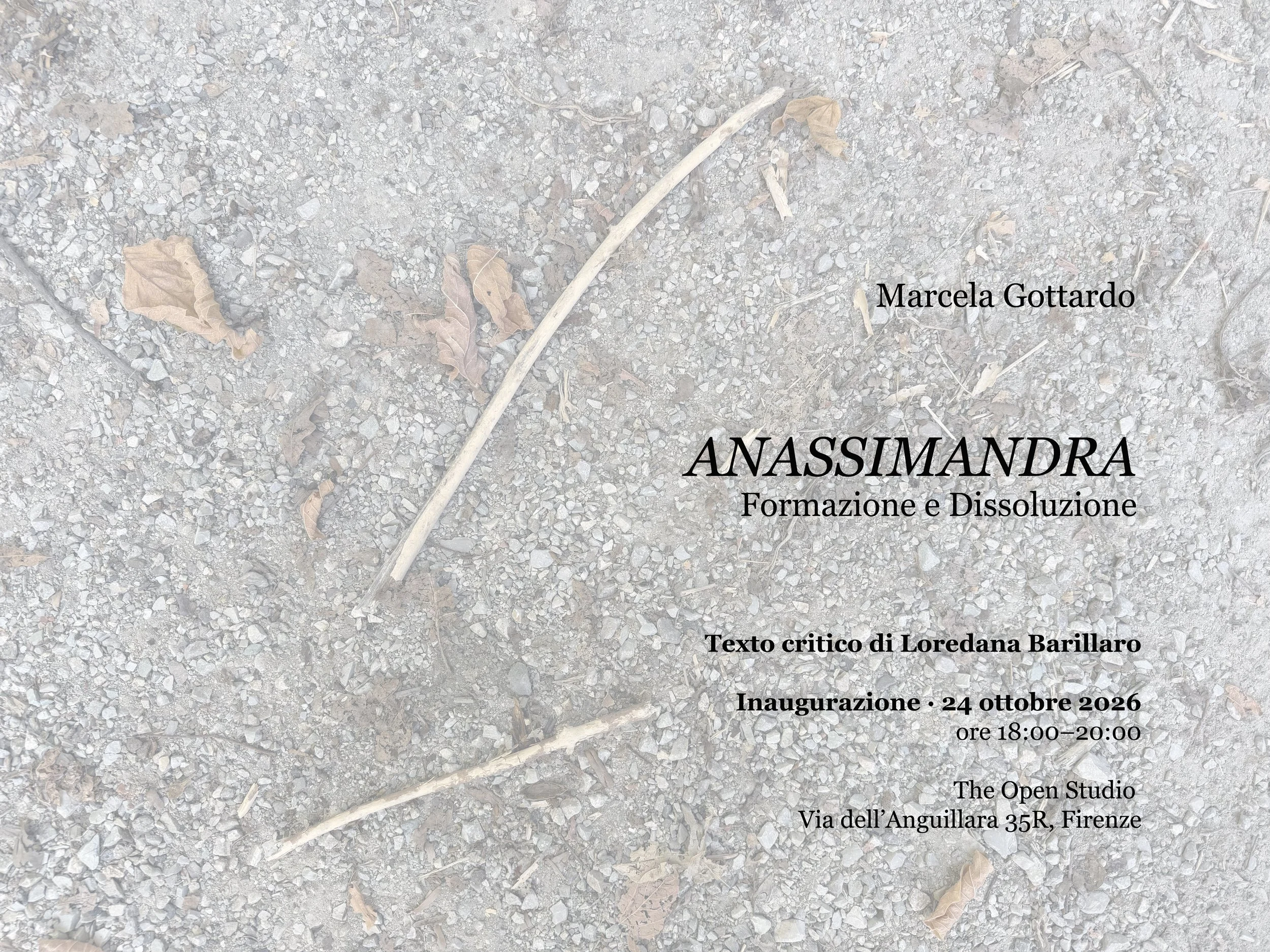
ANASSIMANDRA. Formazione e dissoluzione | Marcela Gottardo
testo critico di Loredana Barillaro
Vernissage: sabato 24 ottobre, ore 18:00 - 20:00
The Open Studio, Firenze
Sabato 24 ottobre 2026 dalle 18:00 alle 20:00 negli spazi della Galleria The Open Studio, in Via dell’Anguillara 35r - a metà fra Piazza San Firenze e Piazza Santa Croce - si terrà il vernissage della personale dell’artista Marcela Gottardo, dal titolo “ANASSIMANDRA. Formazione e dissoluzione”.
La mostra si compone di una serie di opere realizzate in carta, argilla, terracotta, materiali che, come di consueto, connotano la maniera dell’artista la quale si ispira, in questa occasione, al pensiero del filosofo presocratico Anassimandro, da cui, altresì, deriva il titolo dell’esposizione.
Ancora una volta l’artista ci invita ad entrare nel suo processo creativo, fatto di materia e di trasformazione, di spazio e di tempo.
La mostra è accompagnata da un testo critico di Loredana Barillaro.
di Loredana Barillaro
Ciò che Marcela Gottardo presenta in questa mostra prende le mosse da un’intensa riflessione filosofica nonché dal pensiero di Anassimandro - il filosofo della Scuola di Mileto vissuto nel VI secolo a.C. - secondo cui tutto ruota attorno al concetto di arché, il principio primo di tutti gli elementi, identificato nell’àpeiron che, tradotto, vuol dire “ciò che non ha un limite, ciò che non è definito”. Anassimandro immaginava infatti una materia primordiale, priva di confini, da cui ogni cosa deriva e a cui ogni cosa ritorna. Non esiste un inizio e una fine ma una circolarità degli eventi che conduce ad una continua metamorfosi.
È dunque da questo che l’artista muove, da un continuo bisogno di trasformazione, affinché ogni cosa non sia immobile e la forma non sia veramente tale; su questa scia gli elementi che osserviamo sembrano anch’essi sul punto di mutare la loro natura, le loro sembianze. Allo stesso modo il nome del filosofo presocratico viene qui declinato al femminile, divenendo Anassimandra.
La domanda che si pone l’artista è “come emergono le cose?”, se nel pensiero di Anassimandro non c’è inizio e fine, qual è allora il punto di partenza? E’ una domanda arcaica quella che l’artista pone a se stessa, una domanda a cui ogni giorno si tentano infinite risposte e altre si cercano. Cosa sono dunque l’essere umano, la coscienza, il caso, l’evoluzione? Il tempo e lo spazio esistono davvero?
Accanto a domande di natura filosofica Marcela Gottardo si interroga anche sulle leggi della fisica e sulla spiritualità o a questo sembra accostarsi allorché ci si avvicina a quello che un tempo era un Bibbia, oggi trasformata mediante un processo di manipolazione che, probabilmente, non ne muta il contenuto ma lo apre ad uno sguardo altro. “Le pagine della Bibbia - ci dice l’artista - congiunte, piegate e avvolte in una forma che si raccoglie e si distende sul pavimento conservano la propria memoria, le parole diventano trama, superficie e corpo all’interno dello spazio laddove la parola partecipa ai processi di formazione e dissoluzione. La sequenza della lettura si interrompe nelle pieghe e nelle sovrapposizioni, aprendosi a un’esperienza spaziale in relazione all’argilla, all’acqua e alle altre presenze, in questo modo la Bibbia partecipa alla ricerca di Anassimandra. Custode di un racconto dell’origine, essa entra nel divenire della materia. L’origine viene interrogata come una possibilità ancora attiva”.
L’opera è dunque cangiante, è evento che accade e si allontana dal pensiero iniziale, si stacca dal progetto, sembra prendere vita, guidata dal desiderio di lasciarsi andare; ed è qui che il movimento entra quale componente essenziale, esso è impercettibile, non visibile, ma è ciò che determina la composizione e ne consente la fruizione, fatta, ancora, di relazioni spaziali a cui il visitatore è chiamato necessariamente a prendere parte, è chiamato a districarsi fra le opere in un percorso di mostra che non ha, anch’esso, inizio e fine.
Pensiero, materia e spazio, dunque. Non sembra esserci scissione alcuna, l’uno è strumentale all’altro, così come le singole opere che compongono l’allestimento le quali, pur avendo consistenze diverse - pittura, scultura, acqua - determinano un circuito del tutto armonico.
Forma non forma, ciò che vediamo si dissolve, si consuma o, altrove, rinasce, si fa azione mediante la manipolazione della materia. Codici che creano un linguaggio non verbale. Il gesto dell’artista agisce per creare strutture nuove, inaspettate, pronte ad attivarsi nell’incontro con l’osservatore a cui Marcela Gottardo, ancora una volta, ne consegna le sorti.